Platform High Speed Disperser
-
Video
-
-
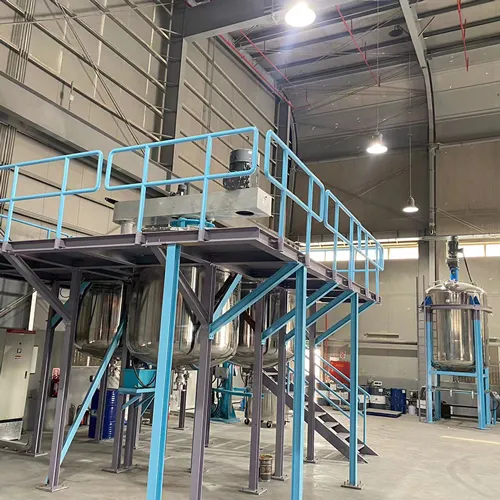
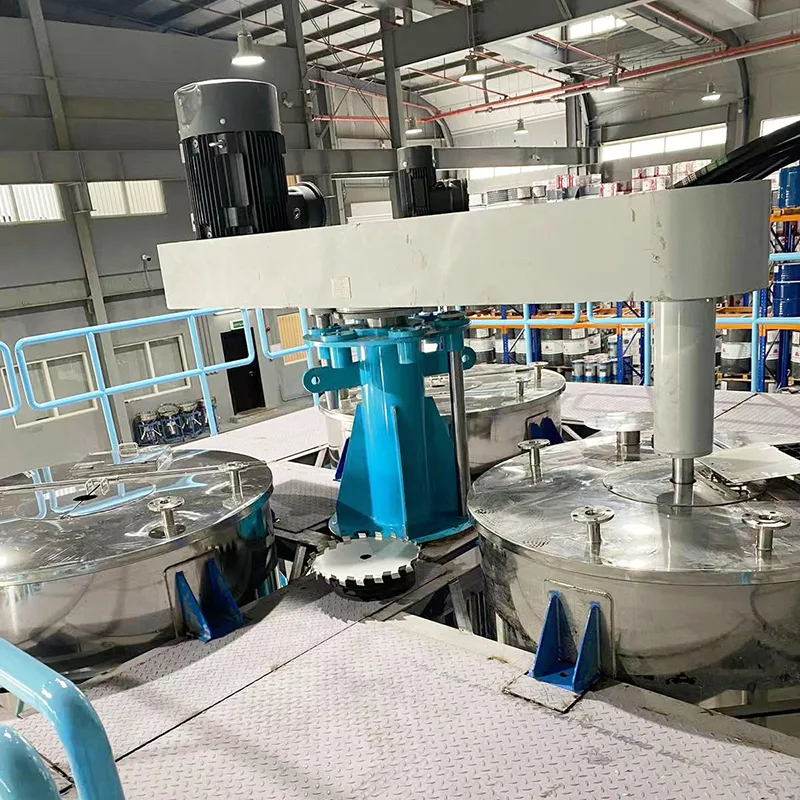
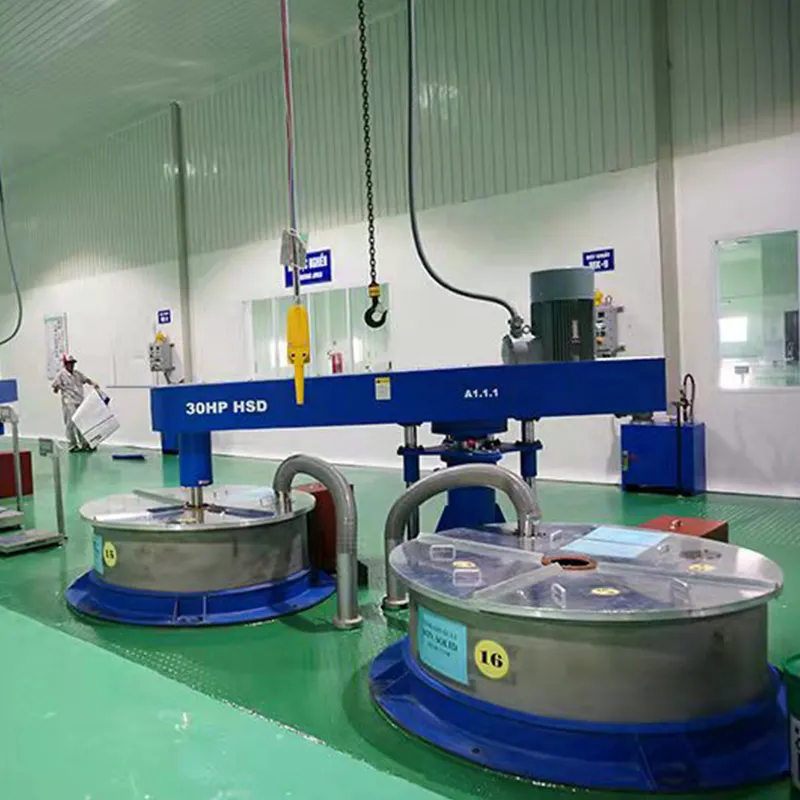
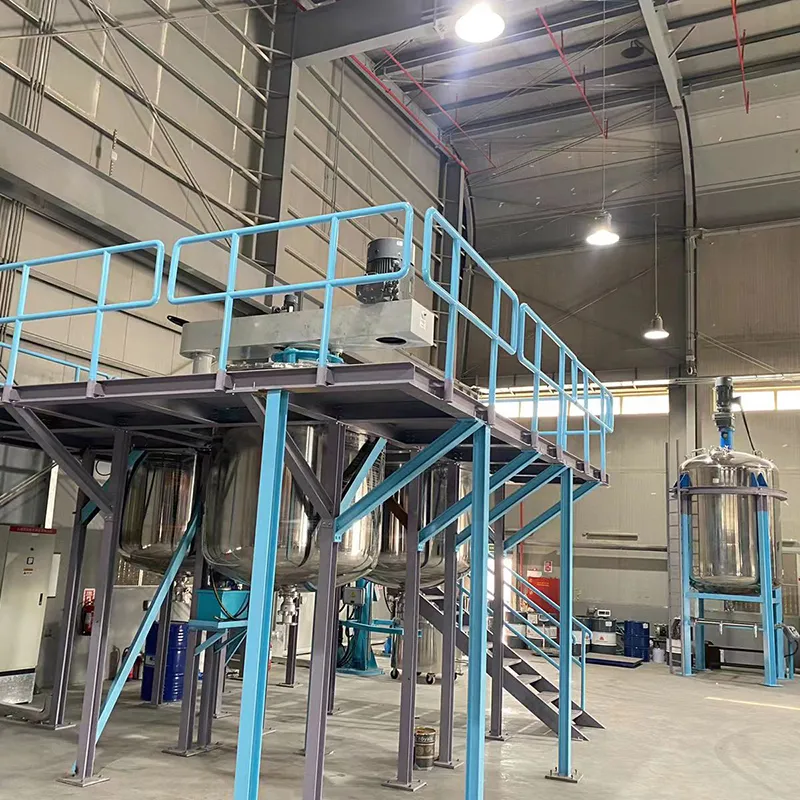
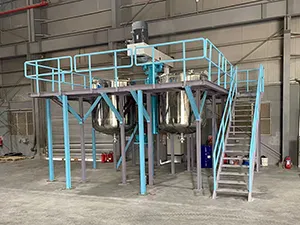
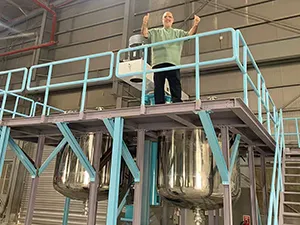
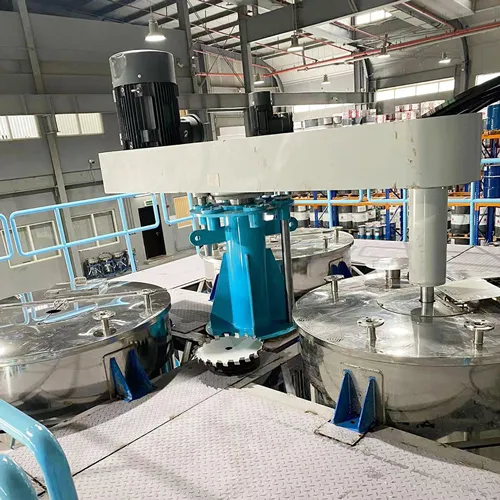
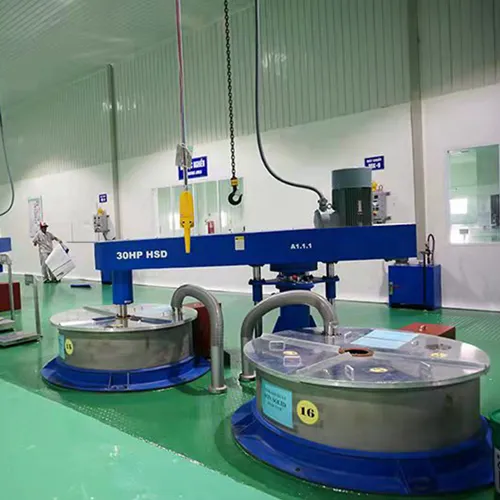
Platform high speed dispersers are built for large-volume mixing and dispersion processes where a standard floor-standing disperser may not be enough. The dispersing head is mounted on a platform structure and works with large-capacity tanks, giving the production area a more stable setup for bigger batches. A hydraulic lifting system moves the dispersing head into position, so different fixed tanks can be used according to the production plan. Once the dispersing disc starts running at high speed, it creates strong material circulation and shear inside the tank, helping the formulation become more uniform and easier to process.
| Model | Motor Power (kW) | Rotation Speed (rpm) | Disc Diameter (mm) | Lifting Stroke (mm) | Hydraulic Pump Power (kW) | Batch Capacity (L) | Weight (kg) |
| 18.5/22/30 | 0-1450 | 350/400 | 1200 | 1.1 | 600-2000 | 1700 | |
| 37/45 | 0-1200 | 450 | 1300 | 1.5 | 1000-3000 | 2100 | |
| 55/75/90 | 0-1200 | 500/550/600 | 1600 | 2.2 | 3000-6000 | 2600 |
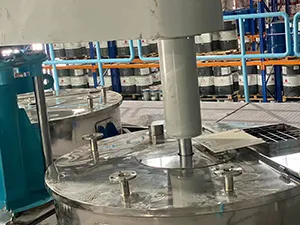 Flat Lid with Powder Feeding Port
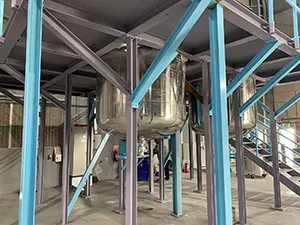 Large-Capacity Tanks
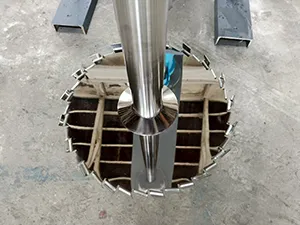 High Speed Dispersing Disc
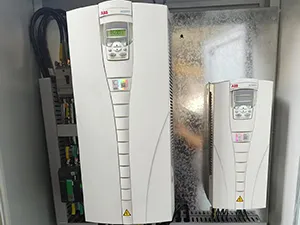 Siemens/ABB Motor and Inverter
Platform high speed dispersers are suitable for wet mixing, dispersion, and homogenization of low- to medium-viscosity liquids, slurries, pastes, and powder-liquid formulations, especially for large-volume batch production.
 Paints and Coatings
 Inks
Inks Leather Coatings
 Pesticides and Fertilizers
 Viscous Materials
 Cosmetics
 Chemicals
 New Materials
- Platform high speed dispersers are designed for large-volume production, with batch capacities ranging from about 500 L to several cubic meters. The larger tank capacity allows more material to be processed in one batch, which helps improve efficiency in high-output production.
- A heavy-duty frame, rigid lifting platform, and high-power drive motor help keep operation stable when processing larger batches or materials with higher viscosity. The stronger structure also gives the dispersing head better support during continuous production.
- The hydraulic lifting system moves the dispersing shaft smoothly and keeps the dispersing head at the required working height, helping maintain stable mixing and dispersion inside the tank.
- Different dispersing discs can be selected according to the material, viscosity, and process requirements, including serrated discs and other disc structures. The platform disperser can also be configured with vacuum defoaming, heating, cooling, sealing, or pressurization functions when the production process requires more control.
- One platform high speed disperser can be matched with multiple large-capacity tanks, up to four tanks depending on the project layout. After dispersion is completed in one tank, the dispersing shaft can be lifted and rotated toward another tank, allowing production to continue with less waiting time between batches.
- Platform lifting and tank movement, when included, can be controlled automatically to reduce manual handling. Easier operation helps lower labor intensity and improves safety during large-volume mixing and dispersion.
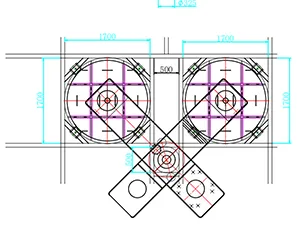
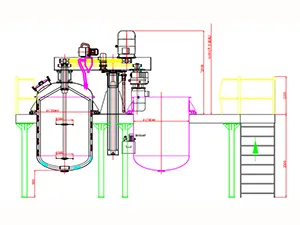
Technical Drawings
We can design technical drawings with specified configurations according to customer needs, and can produce drawings within 3 days. After the customer places an order, we can also create detailed disassembly and assembly diagrams, factory layout diagrams, production line flowcharts, etc. for the corresponding machines if they need them.
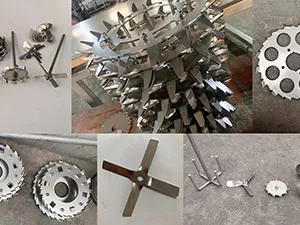
Dispersing Disc Options
Dispersing discs can be made from wear-resistant stainless steel and shaped into serrated or other structures according to the disperser power, material viscosity, and process requirements. The disc shape and tooth angle help create the shear needed for mixing and dispersion, while the sturdy structure makes the disc easier to replace, clean, and maintain.
Blade and Scraper Customization
Depending on the material and production process, the platform high speed disperser can be fitted with different blade structures or a tank-wall scraper. For thicker materials, the scraper keeps material from staying on the tank wall, improving circulation during mixing and making cleanup easier after each batch.