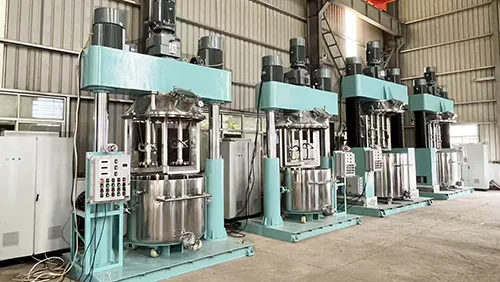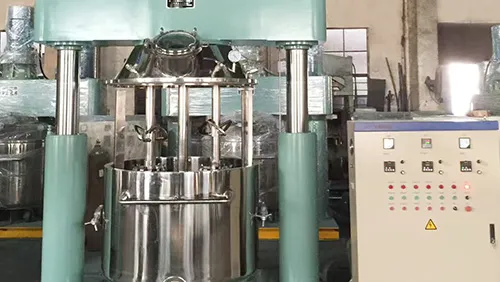
Multi-Shaft Disperser
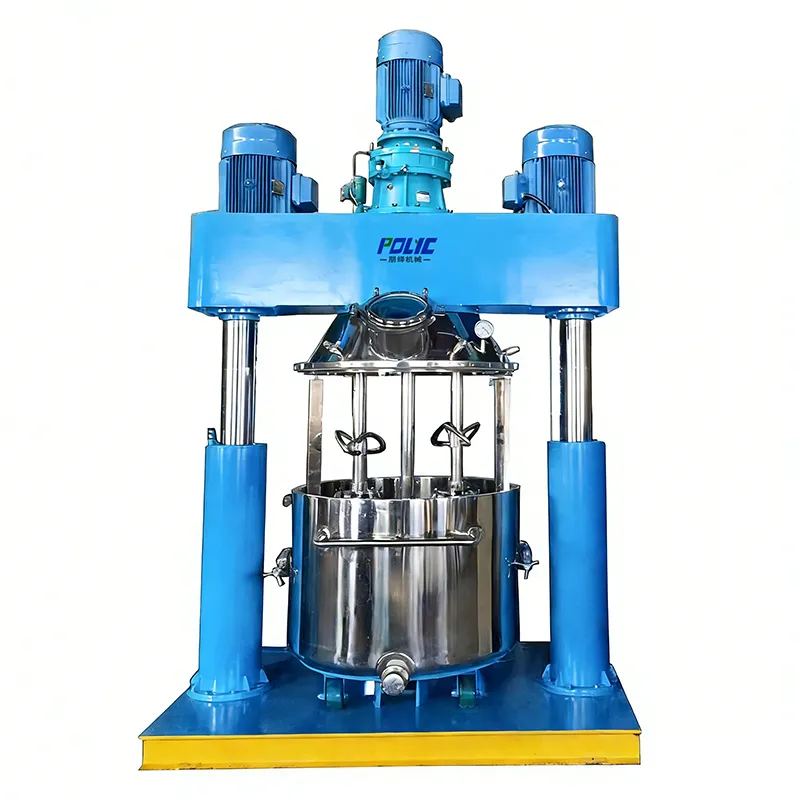
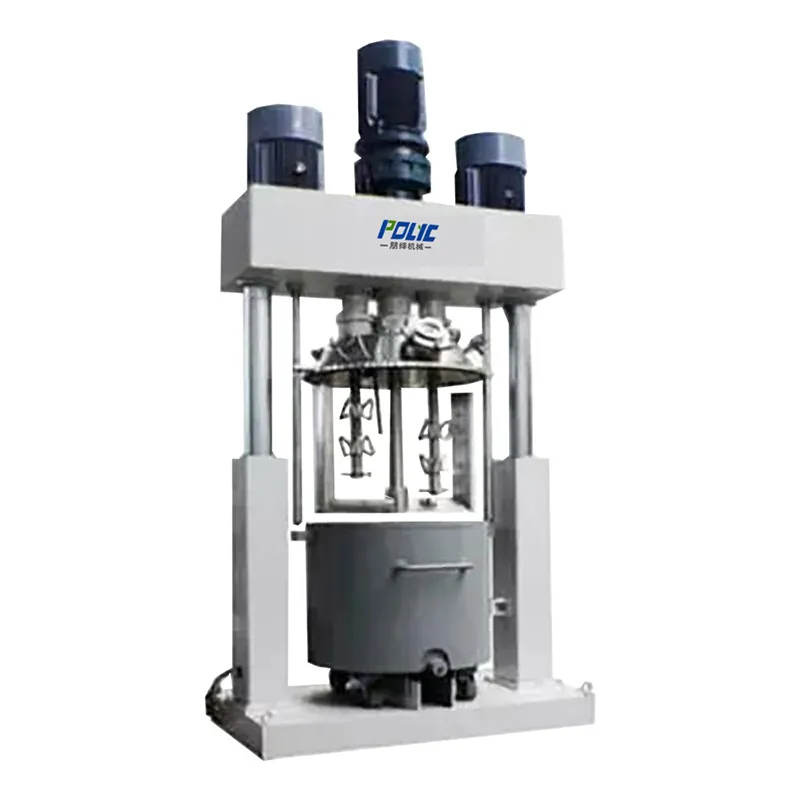
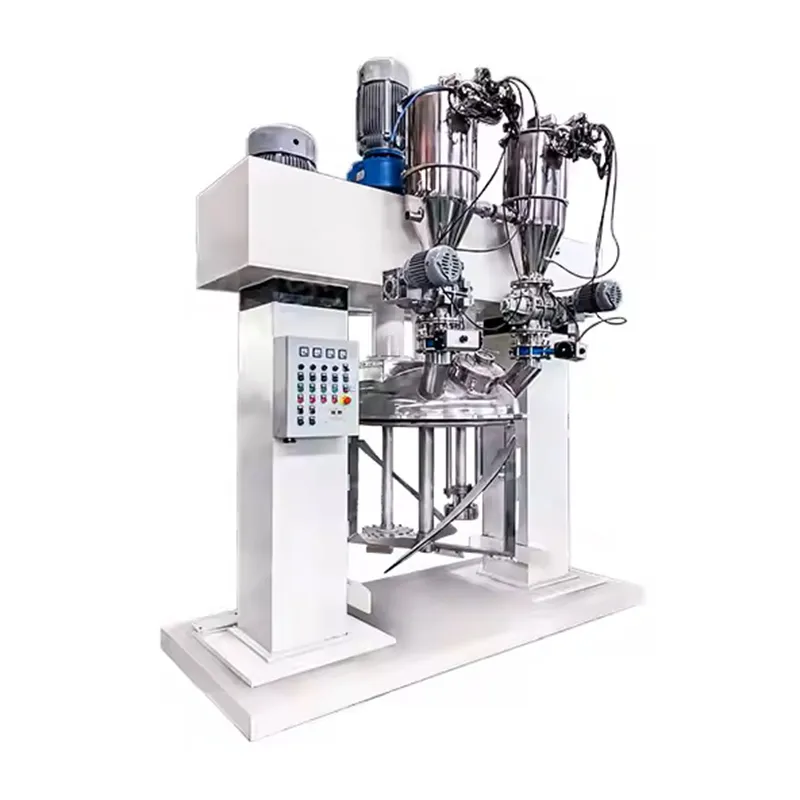
Multi-shaft dispersers are designed for thick, high-solid, or hard-to-mix materials that need strong shear, steady circulation, and more even movement throughout the vessel. Different shafts work together inside the closed container, usually with one shaft for high-speed dispersion, one for homogenization or emulsification, and one for low-speed scraping. The dispersing shaft helps powders enter the liquid phase and breaks down agglomerates, while the homogenizing shaft improves material consistency and the scraping shaft moves product away from the tank wall and bottom. In the same process, the disperser can support feeding, powder wetting, dispersion, homogenization, bulk mixing, heat transfer, and wall cleaning, helping the batch move from raw material mixing to a more uniform final product inside one floor-standing unit.
| Model | Tank Capacity | Stirring Motor Power | Stirring Speed | Dispersing Motor Power | Dispersing Speed |
| L | kW | rpm | kW | rpm | |
| 600 | 15 | 0-40 | 22x2 | 0-1450 | |
| 1500 | 22 | 0-40 | 30x2 | 0-1000 | |
| 3000 | 30 | 0-40 | 37x3 | 0-1000 | |
| 5000 | 45 | 0-40 | 55x2 | 0-1000 |
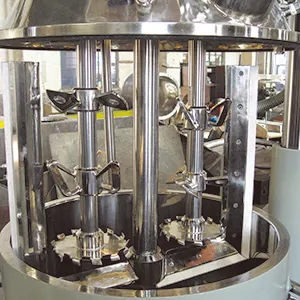 Customized Multi-Function Blades
 Explosion-Proof Operation Panel
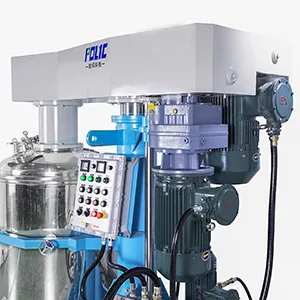 Siemens/ABB Motor
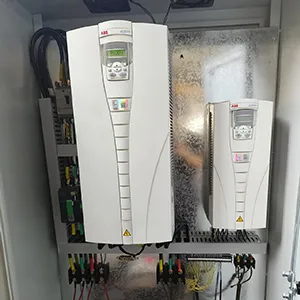 Siemens/ABB Inverter with Schneider Components
Widely used for wet mixing and dispersion of high-viscosity liquids, powder-liquid formulations, slurries, and pastes, especially materials that require strong dispersion, wall scraping, bulk circulation, and stable batch uniformity.
 Paints and Coatings
 Inks
Inks Leather Coatings
 Adhesives
 Viscous Materials
 Cosmetics
 Chemicals
 Glue
Glue
- Each shaft handles a different part of the process, so dispersion, homogenization, bulk mixing, and wall scraping can take place inside the same vessel. The material can move through several processing stages without being transferred between separate dispersers, mixers, or scraping tanks, helping simplify the production flow and improve process control.
- The combined action of the dispersing, homogenizing, and scraping shafts helps process materials that are harder to mix evenly, such as ultrafine powder agglomerates, high-solid formulations, and non-Newtonian fluids. As the material moves through different working zones inside the vessel, particle distribution becomes more even, dispersion becomes more stable, and batch consistency is easier to maintain.
- The multi-shaft structure can handle different material viscosities, from low-viscosity liquids to very thick pastes with viscosity reaching hundreds of thousands of centipoise (cP). It is useful for formulations with complex flow behavior that are difficult to circulate with a single mixing shaft.
- The low-speed scraping shaft moves material along the tank wall and heat exchange surface, while the high-speed shafts generate shear during dispersion and homogenization. As the material keeps circulating instead of staying in one area, heat spreads more evenly through the batch and the temperature becomes easier to control during production.
- Vacuum, inert gas protection, metering and injection, online monitoring, and other process modules can be added according to production needs. PLC control also supports programmed operation, parameter setting, and process data management, making repeated batches easier to control.
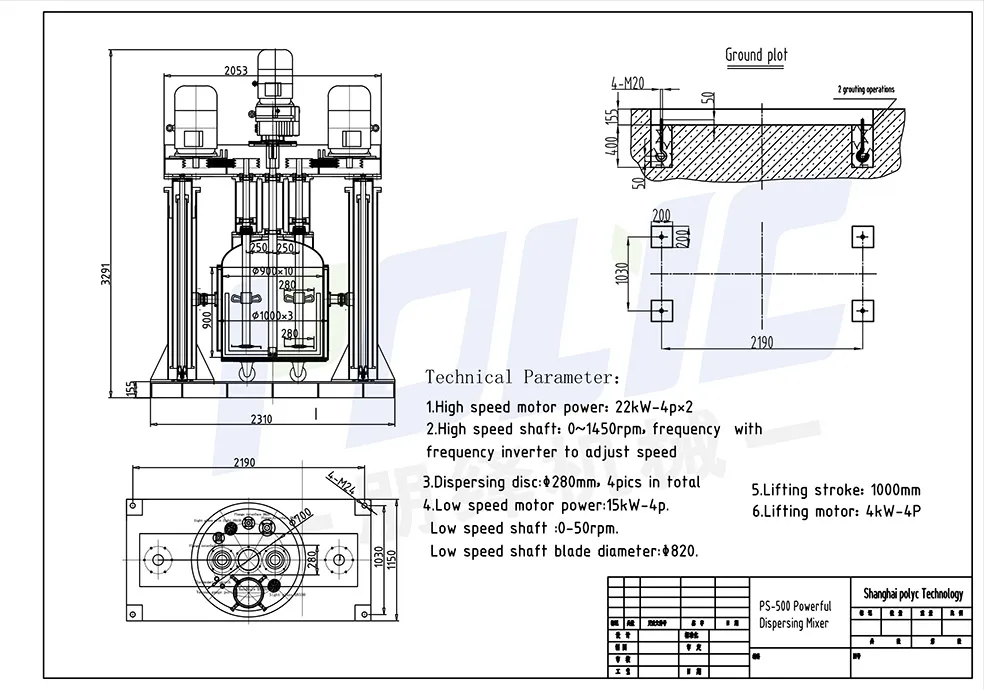
Technical Drawings
We can design technical drawings with specified configurations according to customer needs, and can produce drawings within 3 days. After the customer places an order, we can also create detailed disassembly and assembly diagrams, factory layout diagrams, production line flowcharts, etc. for the corresponding machines if they need them.
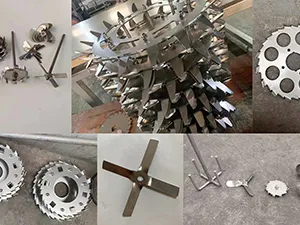
Dispersing Disc Structure
Wear-resistant stainless steel can be shaped into serrated dispersing discs to create strong shear as the disc rotates through the material. The disc design helps pull powders into the liquid phase, break down agglomerates, and improve dispersion uniformity. Disc size and structure can be matched to the disperser power, tank capacity, viscosity, and process target, while the removable design makes cleaning and replacement easier.
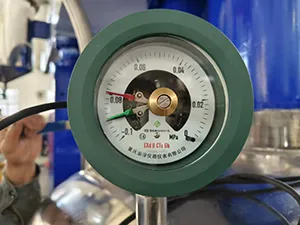
Customized Vacuum, Heating, and Cooling Systems
Vacuum, heating, and cooling systems can be customized according to the production process and material requirements. For materials that require cleaner processing conditions, better corrosion resistance, or higher hygiene control, parts that come into contact with the material can also be customized with food-grade SS316L stainless steel.
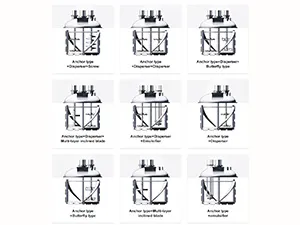
Customized Shaft Functions
By combining various blades across low-speed scraping, medium-speed mixing, and high-speed dispersing shafts, this system offers nearly a hundred custom configurations. Mainstream options include anchor/frame scraping blades for preventing tank-wall sticking, single or multi-layer serrated dispersing discs for breaking down powder agglomerates, and ribbon/screw blades for enhancing axial circulation in high-viscosity materials. High-shear emulsifying heads are available for ultra-fine homogenization, as well as turbine and propeller blades, etc.