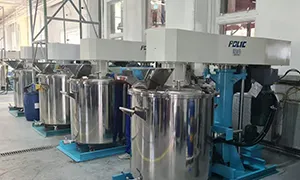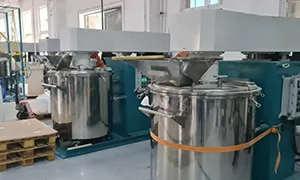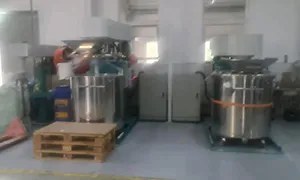
Concentric Double Shaft Mixer
-
Video
-
-
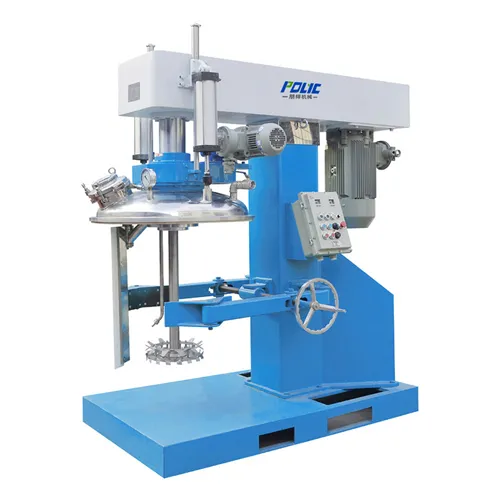
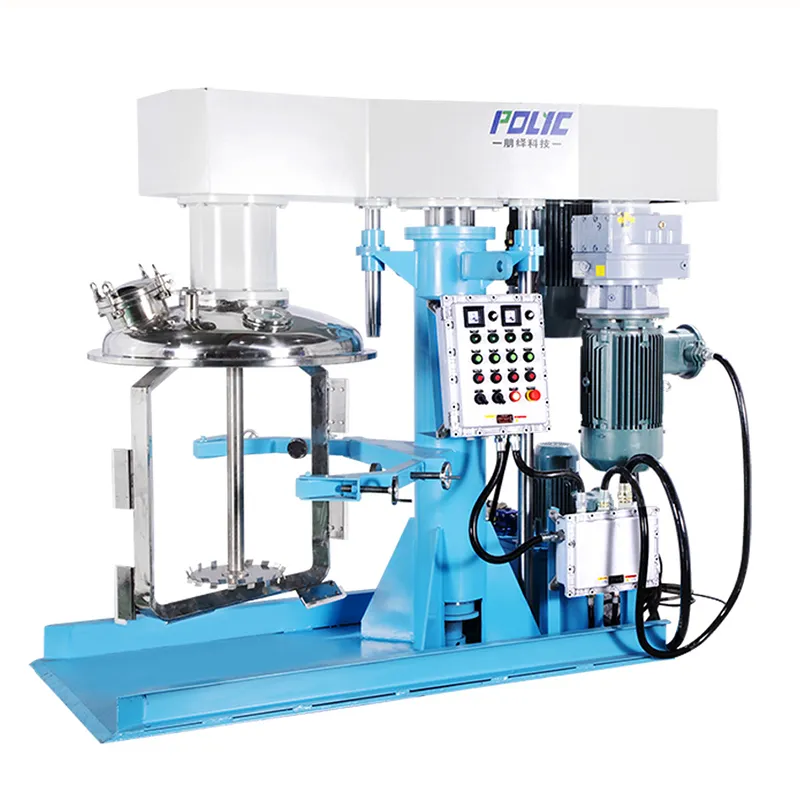
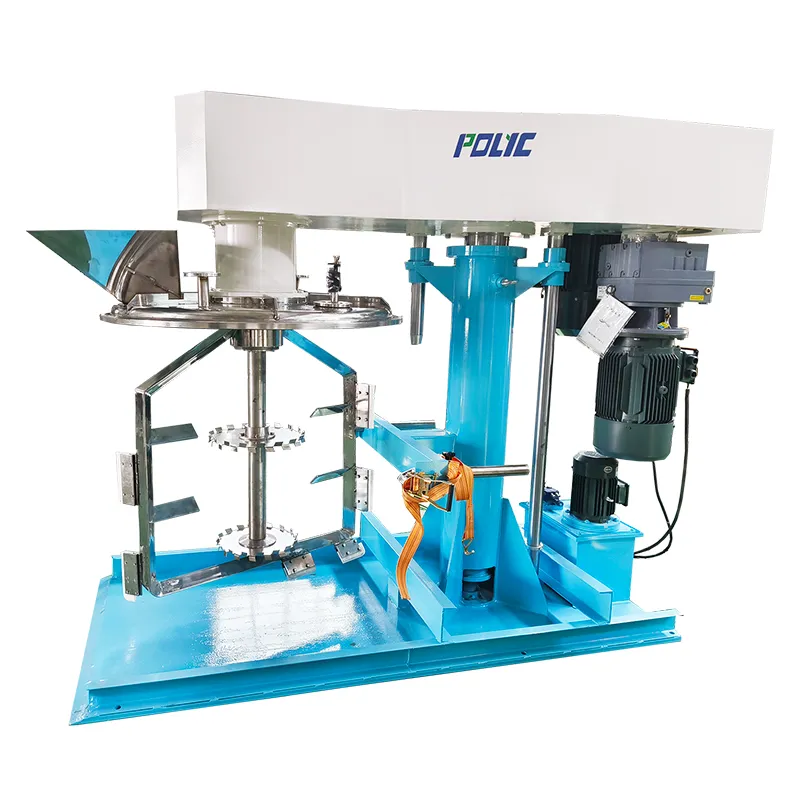
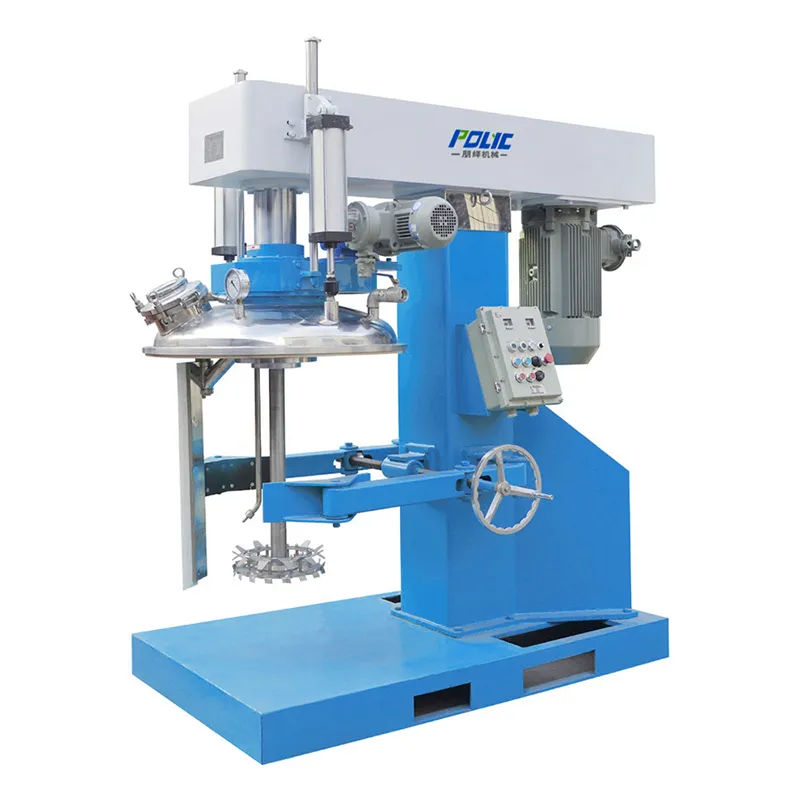
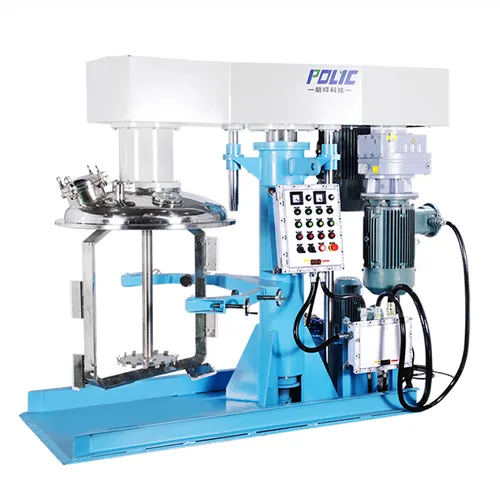
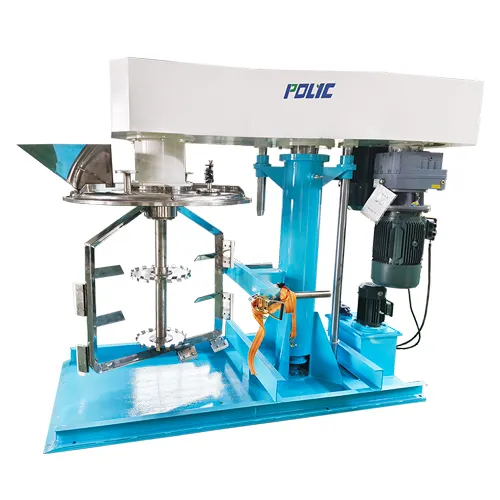
Concentric double shaft mixers are used for materials that need both strong dispersion and steady overall mixing in the same tank. The inner shaft usually works at high speed with a dispersing disc to break down agglomerates and spread solid particles through the liquid, while the outer shaft runs at lower speed with an anchor or frame blade that moves material from the tank wall back into the mixing area. Since the two shafts can work independently, the mixer can handle different process stages, from initial blending to final uniform mixing. Medium- to high-viscosity materials, high-solid formulations, and non-Newtonian fluids can be processed with better circulation, wall scraping, and dispersion control during production.
| Model | Mixing Motor Power | Mixing Speed | Dispersing Motor Power | Dispersing Speed | Tank Capacity |
| kW | rpm | kW | rpm | L | |
| 4 | 50 | 11 | 0-1450 | 150 | |
| 5.5 | 40 | 15 | 0-1450 | 300 | |
| 7.5 | 25 | 22 | 0-1450 | 500 | |
| 11 | 25 | 37 | 0-1450 | 1000 | |
| 15 | 25 | 55 | 0-1450 | 1500 |
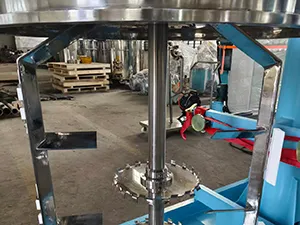 Dispersing Shaft with PTFE Scraper
 Explosion-Proof Control Panel
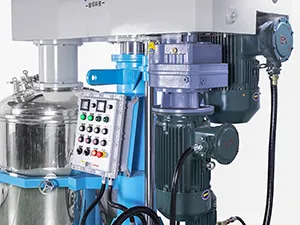 Siemens/ABB Motor
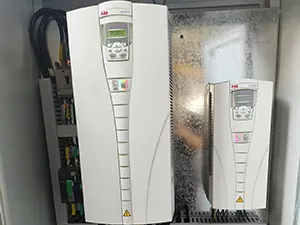 Siemens/ABB Inverter with Schneider Components
Concentric double shaft mixers are suitable for wet mixing and dispersion of medium- to high-solid-content liquids, slurries, powder-liquid formulations, plaster, pastes, and other materials that require both high-speed dispersion and low-speed wall scraping.
 Paints and Coatings
 Inks
Inks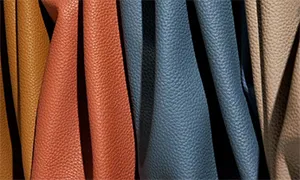 Leather Coatings
 Adhesives
 Viscous Materials
 Cosmetics
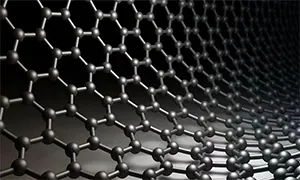 Chemicals
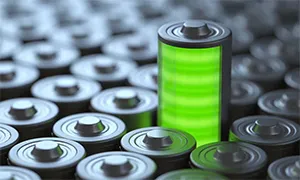 New Materials
- The high-speed inner shaft creates strong shear to disperse powders, break down agglomerates, and refine the material, while the low-speed outer shaft scrapes the tank wall and keeps the full batch moving. Both actions work together in the same tank, allowing dispersion, mixing, and circulation to be completed in one process.
- The combination of a high-speed dispersing shaft and a low-speed scraping shaft allows the mixer to process materials across a wider viscosity range, from low-viscosity liquids to medium- and high-viscosity pastes. This is useful for formulations that are too thick or too complex for a single-shaft mixer to handle evenly.
- The outer scraping blade continuously moves material away from the tank wall, helping prevent uneven heating, cooling, or local material buildup. More contact between the material and the jacket also improves heat transfer during heating or cooling processes.
- Low-speed wall scraping helps reduce material retention on the tank wall and bottom, so the batch can circulate more evenly inside the vessel. Better material movement supports more uniform mixing and improves batch-to-batch consistency.
- The two shafts can run at independently adjusted speeds, giving operators more control over each production stage. Different speed combinations and process programs can be set according to the formula, viscosity, and required mixing or dispersion effect.
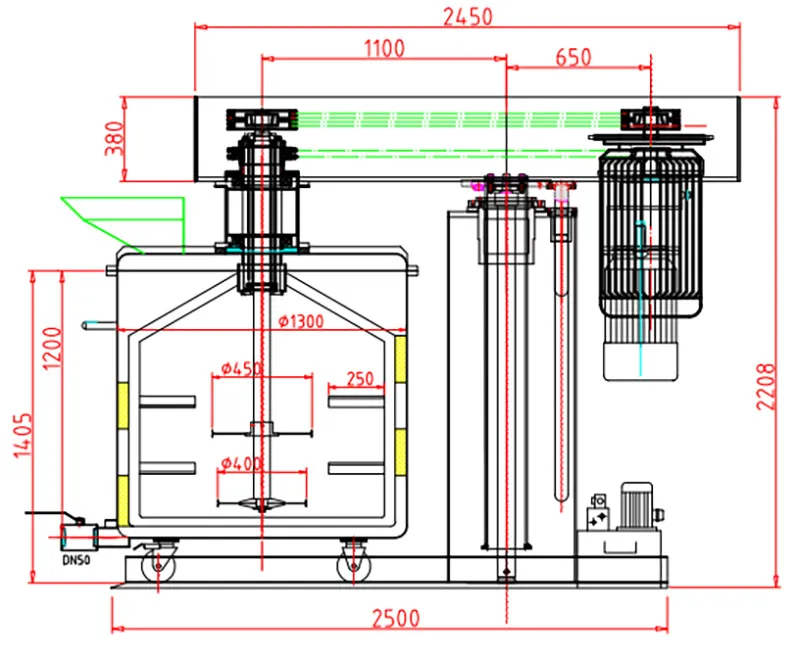
Technical Drawings
We can design technical drawings with specified configurations according to customer needs, and can produce drawings within 3 days. After the customer places an order, we can also create detailed disassembly and assembly diagrams, factory layout diagrams, production line flowcharts, etc. for the corresponding machines if they need them.
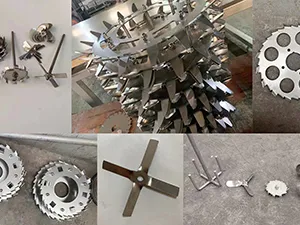
Dispersing Disc Design
The dispersing discs are made from wear-resistant stainless steel and can be shaped with serrated edges to generate the shear needed for mixing and dispersion. Disc size, structure, and layout can be selected according to mixer power, material viscosity, and process requirements, while the removable design makes cleaning and replacement more convenient.
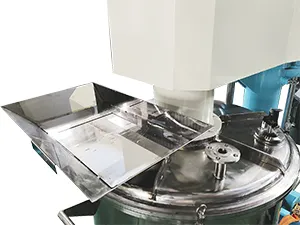
Customized Powder Feeding Hopper
Powder feeding hoppers can be customized according to the material, feeding method, and production process. During mixing, the hopper allows powders, additives, or other solid ingredients to be added into the tank more conveniently and with better control.
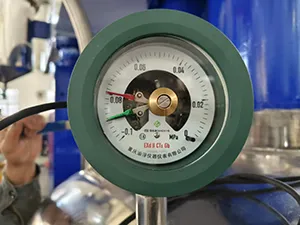
Optional Vacuum, Heating, and Cooling Systems
Vacuum, heating, and cooling systems can be added according to the production process and material requirements. For applications with higher hygiene, corrosion-resistance, or cleanliness needs, the material contact parts can also be made from food-grade stainless steel such as SS316L.