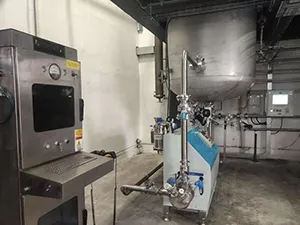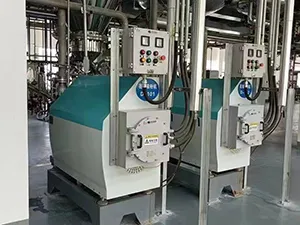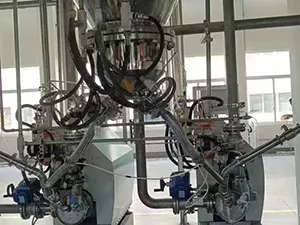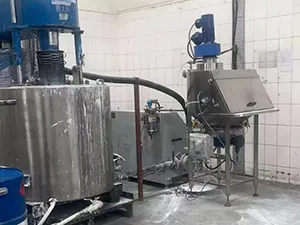
Inline Disperser
-
Video
-
-
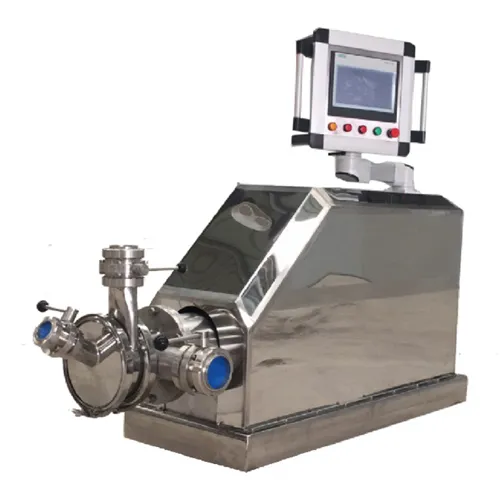
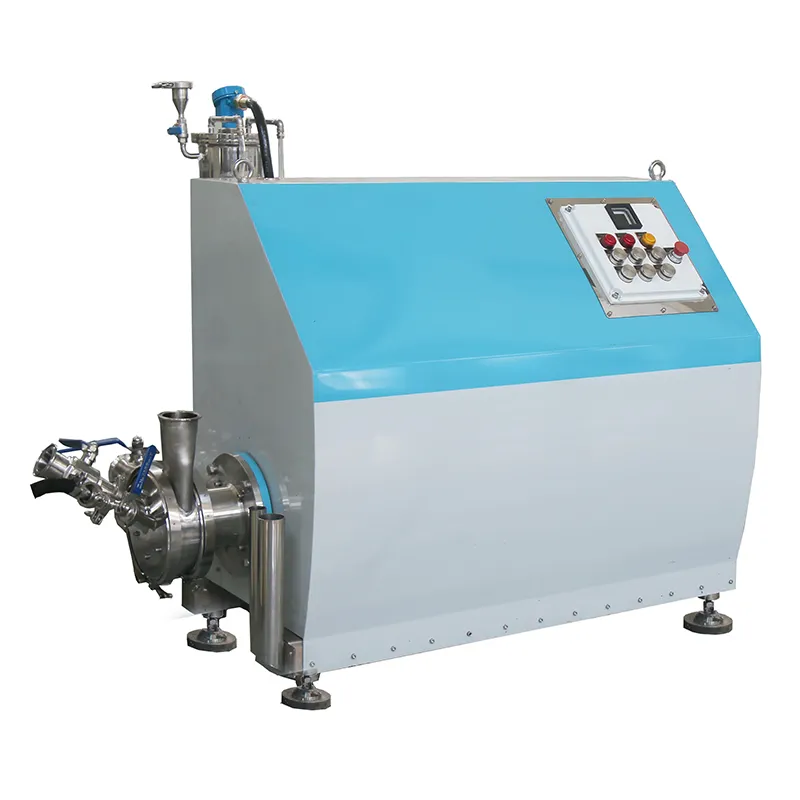
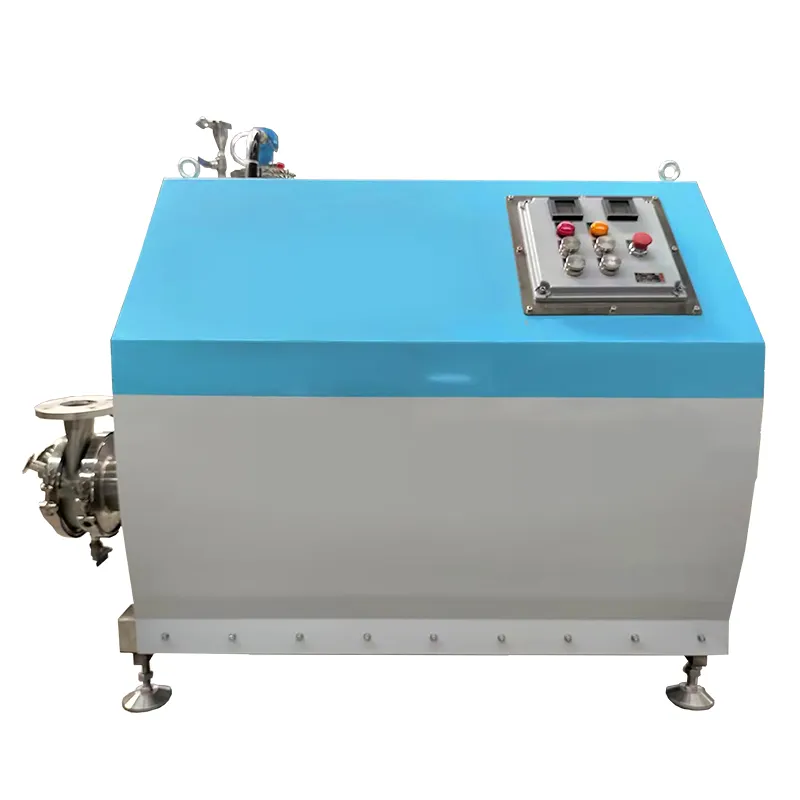
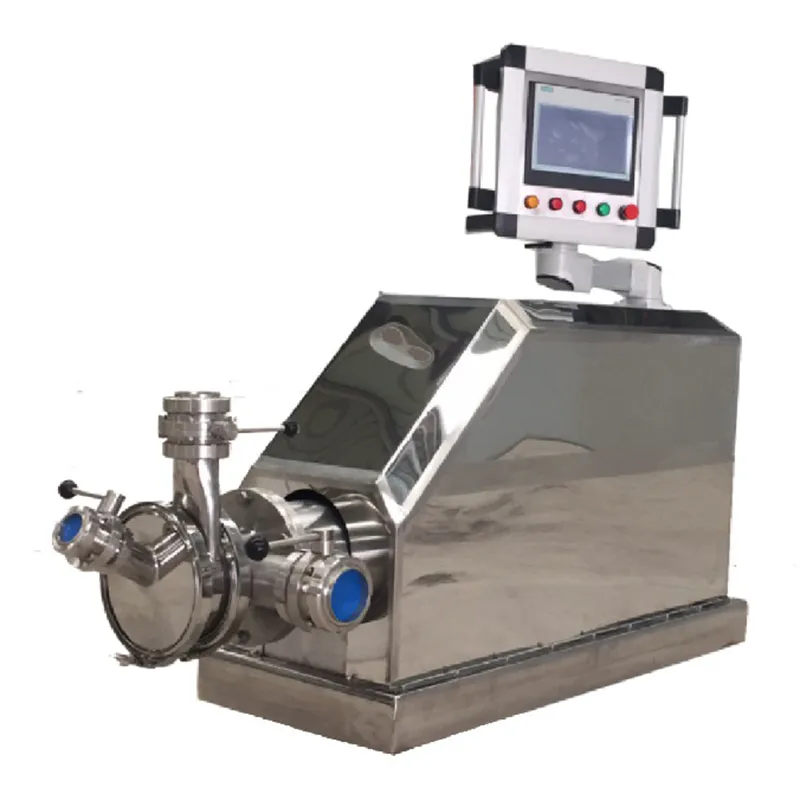
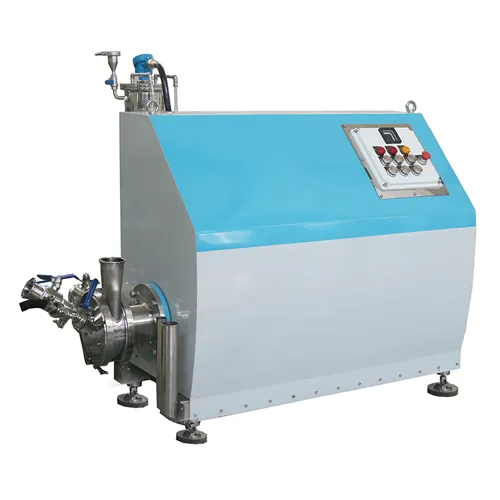
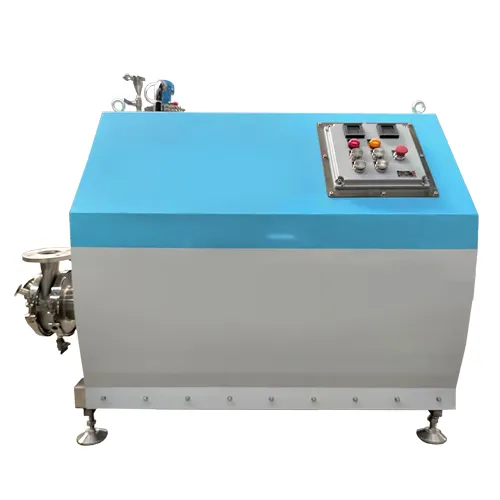
Inline dispersers are used to wet, blend, disperse, deagglomerate, dissolve, emulsify, and homogenize materials in a continuous process. Instead of relying only on batch dispersion in an open tank, the material passes through a rotor-stator working chamber, where strong shear, turbulence, and cavitation help powders wet out quickly and break down agglomerates. Powder induction can also be integrated to reduce dust during feeding and improve production cleanliness. Inline dispersers can be configured for small-batch production or larger automated lines, which is suitable for processes that need faster mixing, better dispersion consistency, and continuous operation.
| Model | Motor Power (kW) | Powder Induction Rate (kg/min) | Rotation Speed (rpm) |
| 7.5/11 | 1–30 | 3000 | |
| 22/30 | 5–150 | 3000 | |
| 45/55 | 10–200 | 3000 | |
| 75/90 | 30–200 | 3000 |
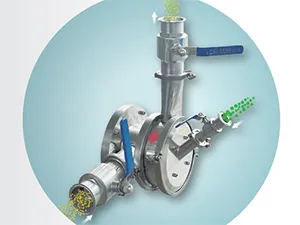 Powder-Liquid Inlet
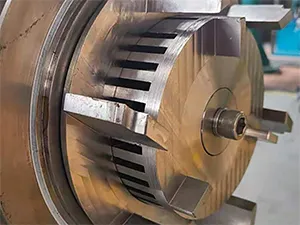 Rotor-Stator Working Head
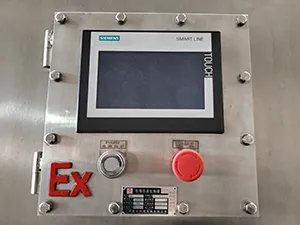 Explosion-Proof PLC Control Panel
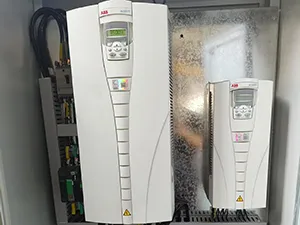 Siemens/ABB Drive System
Suitable for wet processing of high-viscosity liquids, slurries, pastes, and powder-liquid formulations that require powder wetting, dispersion, deagglomeration, emulsification, or homogenization in a continuous process.
 Paints and Coatings
 Inks
Inks Leather Coatings
 Viscous Materials
 Cosmetics
 Chemicals
 New Materials
- Inline dispersers can be integrated directly into a pipeline, allowing materials to be processed continuously instead of only in separate batches. This setup is suitable for automated production lines and can help improve production efficiency and capacity.
- Materials pass through the working chamber quickly, where wetting, dispersion, and deagglomeration take place in a shorter processing time. This helps reduce long circulation cycles and makes the overall production flow faster.
- The high-precision multi-stage rotor-stator structure generates strong mechanical and hydraulic shear, helping improve dispersion and homogenization. Depending on the material and process settings, the dispersion fineness can reach the micron or even nanoscale range.
- Continuous processing helps reduce batch-to-batch variation found in traditional batch production, making product quality more consistent during large-scale production.
- The modular structure has a compact footprint and can be installed flexibly into existing pipeline systems. It can also be connected with powder feeding, metering, conveying, and other systems for more coordinated production.
- Dispersion quality can be improved while reducing milling time by up to two-thirds, depending on the material and process conditions.
- Powder induction can be handled in a more enclosed process, helping reduce dust and lower energy use during production.
- Higher production capacity can be achieved within a smaller floor area, which helps make better use of factory space.
- Fewer powder handling devices may be needed because powder induction, wetting, dispersion, and deagglomeration can be completed in one process stage.
- Production time, batch changeover, and operating costs can be reduced when the inline disperser is integrated into the process flow.
- Improved powder wetting and dispersion may reduce the need for thickeners, defoamers, and wetting agents in some formulations, while keeping the material easier to process.
- The inline disperser can support flexible batch sizes and easier color changeover, making it suitable for production lines with different formulations.
- Skid-mounted configurations are available for easier installation, movement, and integration into existing production areas.
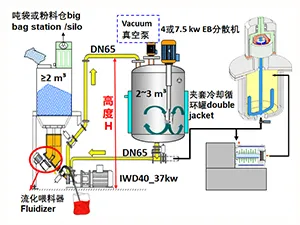
Process Flow Diagram
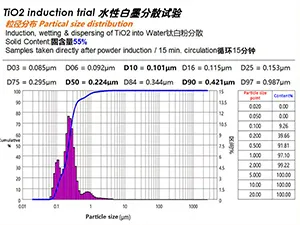
Shear and Cavitation for Fast Powder Wetting
When powder and liquid enter the inline disperser, the rotor-stator working head generates strong shear, turbulence, and cavitation. These forces help pull the powder into the liquid phase, break down agglomerates, and reduce trapped air around the particles. The material is wetted and dispersed quickly inside the chamber, forming a more uniform mixture and reducing the risk of dry powder clumps or later settling.
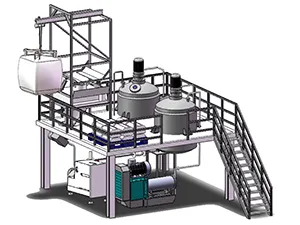
Powder Feeding Options for Different Production Scales
For small-batch production, the inline disperser can draw powder directly from small bags, such as 25 kg bags. For larger batches, the system can be connected to a ton bag or small bag feeding station, with powder bag opening, metering, conveying, and feeding arranged in a more enclosed process. A more enclosed feeding process helps reduce dust, limit material loss, improve feeding efficiency, and support safer production in cleaner workshop environments.