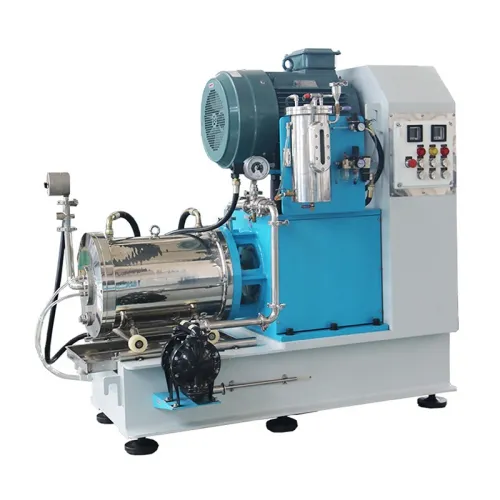
Pin Type Bead Mill
-
Video
-
-
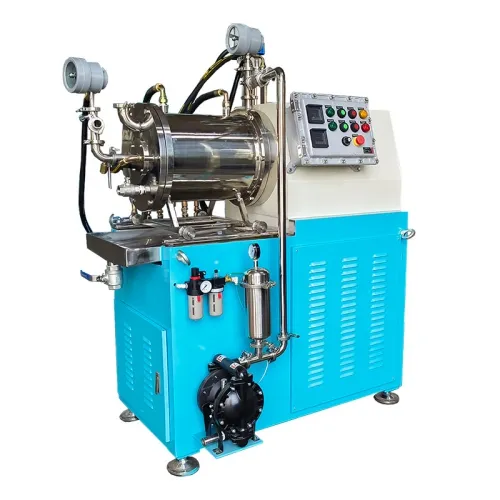
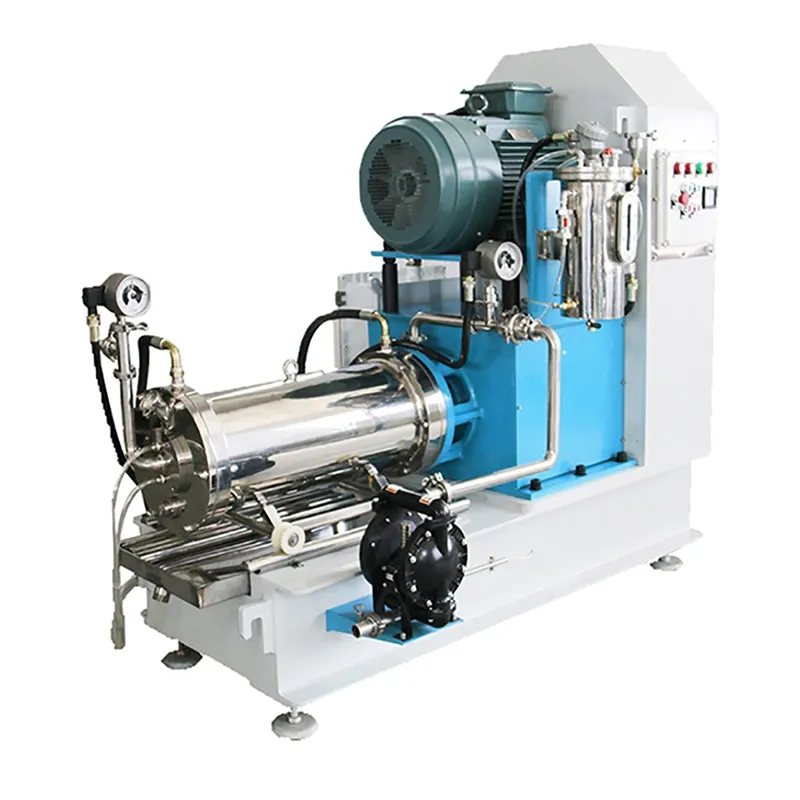
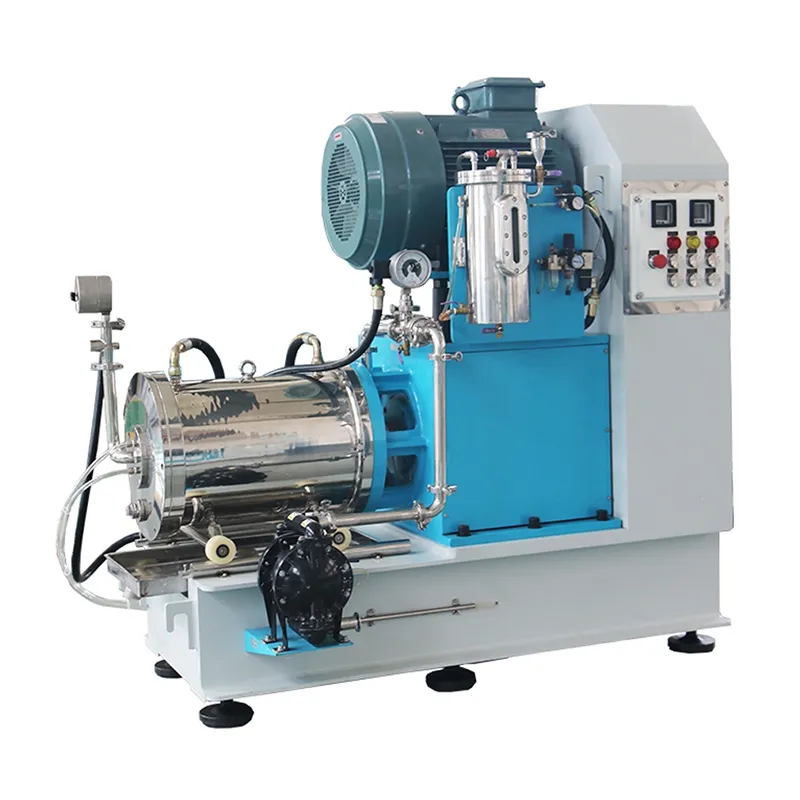
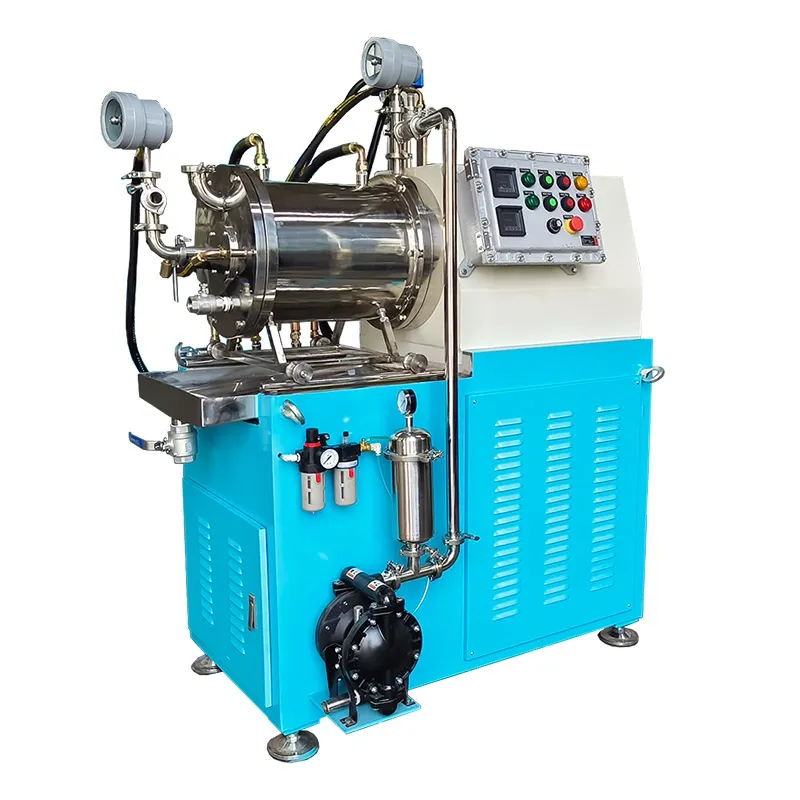
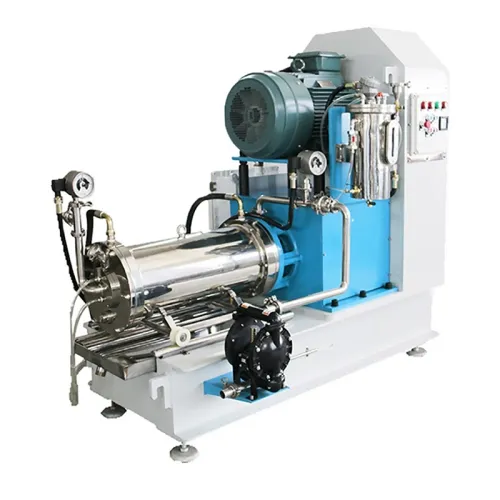
Pin type bead mills are used for wet grinding and dispersion of liquid, slurry, and paste-like chemical materials. Inside the grinding chamber, the pin rotor keeps the beads moving through the material, so particles are broken down gradually instead of just being mixed. The static centrifugal separator holds the beads inside the chamber while allowing the finished material to discharge more smoothly, which is useful for continuous processing. Proper adjustment of the grinding setup can bring the material down to submicron or nanoscale fineness while improving color strength, transparency, and pigment use. They are suitable for materials with viscosity below 15,000 mPa·s and are commonly used for paints, coatings, dyes, pigments, color pastes, inks, pesticides, and other chemical formulations.
| Model | Working Volume (L) | Motor Power (kW) | Production Capacity (L/h) | Cooling Water Flow (L/h) |
| 6 | 15 | 100–200 | 1000 | |
| 10 | 18.5 | 200–500 | 1500 | |
| 20 | 30 | 300–600 | 2000 | |
| 30 | 37/45 | 500–800 | 2000 | |
| 60 | 75 | 600–1500 | 2500 | |
| 150 | 160/200 | 800–2000 | 4000 |
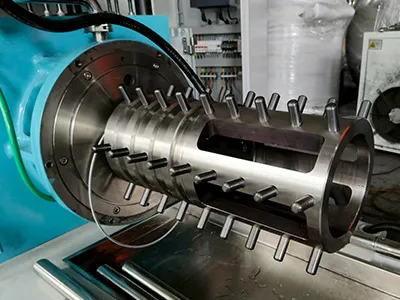 Grinding Pins
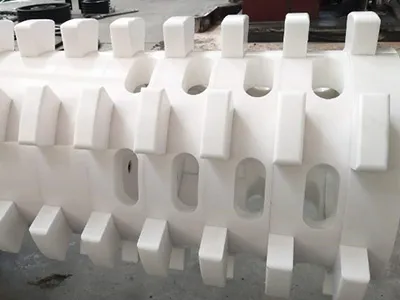 Ceramic Pins
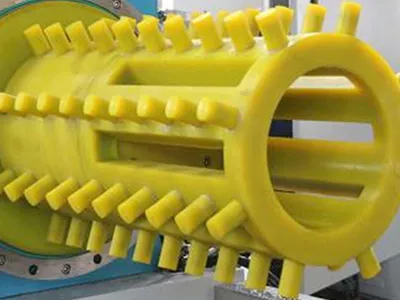 PU Pins
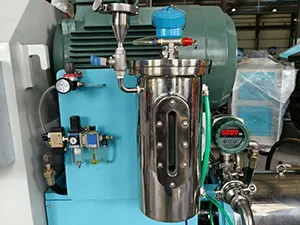 Sealed Cooling Tank
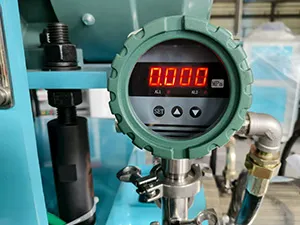 Digital Pressure Meter
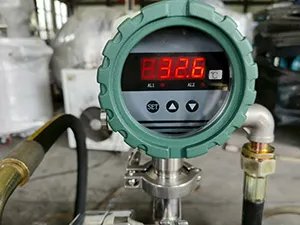 Digital Temperature Meter
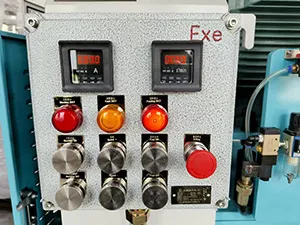 Explosion-Proof Control Panel
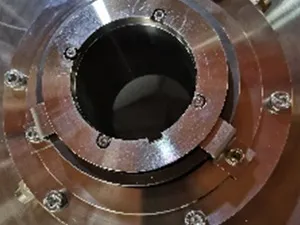 Double Mechanical Seal
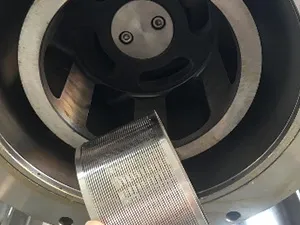 Separation Screen
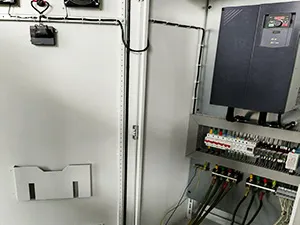 Control Cabinet with Inverter
Pin type bead mills are suitable for wet grinding and dispersion of liquid, slurry, paste-like, and powder-liquid formulations, where solid particles are processed in a liquid base rather than as dry powder.
 Paints and Coatings
 Inks
Inks Leather Coatings
 Pesticides and Fertilizers
 Viscous Materials
 Cosmetics
 Chemicals
 New Materials
- Higher processing capacity
The pin type bead mill uses a static centrifugal separation system to keep the grinding media inside the chamber while allowing the processed material to discharge smoothly. Higher flow rates can be achieved during continuous operation, helping production stay stable and efficient. - Efficient grinding performance
The closed horizontal grinding structure and pin rotor design create strong grinding action inside the chamber. This helps improve particle size reduction and dispersion efficiency while supporting stable output during production. - Fine particle size and narrow PSD
Grinding media as small as 0.1-0.2 mm can be used based on the material and process specifications. When the working settings are set correctly, the bead mill can aid in achieving submicron or nanoscale fineness with a more regulated particle size distribution. - Stable chamber and rotor structure
The rotor and grinding chamber are arranged to improve material flow, reduce unnecessary wear, and make better use of grinding energy, which helps the bead mill run more steadily during long production cycles. - Multiple cooling design for temperature control
Temperature control is important during wet grinding because excessive heat can affect material stability, viscosity, color performance, and final particle distribution. The cooling design helps remove heat from different areas of the bead mill during operation.
- Cooling water passes through spiral channels around the grinding chamber to remove heat from the main working area.
- Rotor cooling can be added to improve heat exchange inside the grinding area.
- More even temperature control helps keep the material condition more stable during grinding.
- A more controlled grinding temperature can allow for a narrower PSD while also improving colour strength and pigment utilisation in inks, coatings, colour pastes, and other compositions.

The PLC + HMI control system allows operators to set process parameters, monitor operation, and save data for repeat batches, making daily operation easier and helping new operators follow established process settings more consistently.
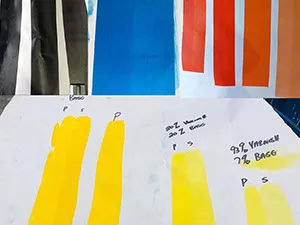
In grinding processes, controlled temperature helps protect the material, keep dispersion quality consistent, and improve color strength, transparency, and pigment use in inks, coatings, and color pastes.
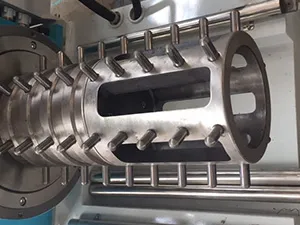
The grinding chamber, rotor, and pins can be made with different materials to match the product being processed, such as silicon carbide, tungsten carbide, zirconia, polyurethane, or high wear-resistant alloy steel.
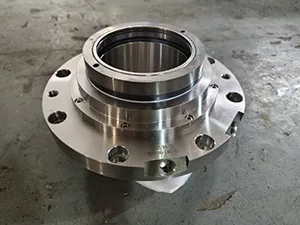
Equipped with a double mechanical seal and an integrated self-circulation structure for low leakage and easy maintenance. Optional FFKM rings and compatible coolants ensure excellent solvent resistance.
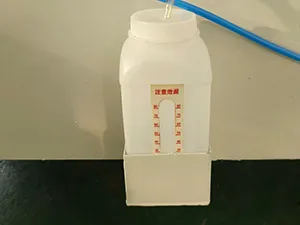
A small collection tank at the bottom of the bead mill receives any liquid leakage from the mechanical seal area, making it easier for operators to check the seal condition and take preventive action when needed.
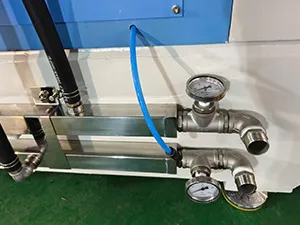
Meters on the cooling water inlet and outlet make temperature monitoring easier during production and help operators keep the grinding process more stable.
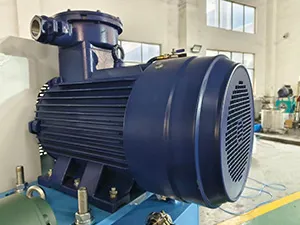
Motor options can be chosen according to production and safety requirements, including Jiangsu Dazhong, Siemens, ABB, and other suitable brands. Explosion-proof motors and certifications such as CE or ATEX can also be provided when required by the project.
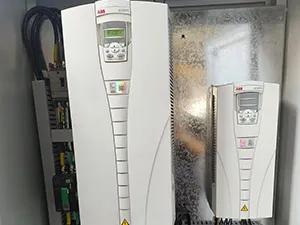
Siemens or ABB inverters and Schneider Electric components can be used to support stable speed control and smoother operation during grinding and dispersion.